Operating a commercial poultry feed mill requires more than installing feed processing equipment. Stable production depends on correct startup procedures, regular equipment inspections, consistent process monitoring, effective quality control, and safe shutdown practices.
For a 1–10 T/H poultry feed production line, operating procedures must coordinate raw material handling, grinding, batching, mixing, conditioning, pelletizing, cooling, screening, and packaging equipment.
RICHI Machinery supplies industrial poultry feed processing equipment and customized complete feed production lines for commercial feed manufacturing projects.
This guide introduces practical operating considerations for a 1–10 T/H poultry feed mill, including pre-start inspections, production monitoring, pellet quality checks, routine maintenance, troubleshooting, and shutdown procedures.
Important: This article provides general operational guidance. Actual startup, shutdown, maintenance, and safety procedures must follow the equipment manufacturer's instructions, site-specific operating procedures, and applicable industrial safety requirements.
Why Proper Poultry Feed Mill Operation Matters
Commercial poultry feed production lines contain multiple interconnected machines. Problems in one processing stage can affect the performance of the entire factory.
For example, unstable raw material feeding may affect grinding performance, incorrect batching may cause formulation errors, and improper conditioning may influence pellet quality and production efficiency.
Standardized operating procedures help feed manufacturers:
- Maintain consistent feed production.
- Reduce avoidable equipment downtime.
- Improve production process stability.
- Control material losses and excessive fines.
- Maintain finished feed quality.
- Improve maintenance planning.
- Reduce operational and safety risks.
- Maintain reliable production records.
Operating Characteristics of 1–10 T/H Poultry Feed Mills
RICHI Machinery provides commercial poultry feed production line solutions for different capacities and factory requirements.
Although processing equipment varies between projects, many operating principles are shared across small and medium-sized industrial feed mills.
| Production Capacity | Typical Operating Considerations |
|---|---|
| 1–2 T/H | Coordinating compact processing equipment and manual or semi-automatic operations |
| 3–4 T/H | Managing batching accuracy, production scheduling and continuous material flow |
| 5–7 T/H | Maintaining stable feeding, pelletizing and downstream equipment coordination |
| 8–10 T/H | Managing higher material throughput, automation, process monitoring and preventive maintenance |
Actual operating requirements depend on the equipment configuration, feed formulation, automation level, and plant layout.
1. Pre-Startup Inspection Checklist for a Poultry Feed Mill
Before starting production, trained operators should confirm that the equipment is in suitable operating condition.
Pre-start inspections help identify abnormal conditions before material enters the processing system.
Check the Production Area
- Confirm that work areas are clean and accessible.
- Check for accumulated feed dust and spilled materials.
- Verify that machine guards and access covers are correctly installed.
- Ensure that maintenance work has been completed and equipment has been formally released for operation.
- Confirm that emergency stops and safety interlocks are in the required condition.
Inspect Raw Material Handling Equipment
- Check receiving equipment and conveyors for visible obstructions.
- Confirm that raw material bins contain the correct ingredients.
- Inspect material transfer points for leakage or accumulation.
- Verify that cleaning and magnetic separation equipment is ready for operation.
Inspect Grinding Equipment
Before operating the hammer mill, check the equipment according to the manufacturer's inspection procedures.
Relevant items may include:
- Hammer and screen condition.
- Rotor and bearing condition.
- Fasteners and access covers.
- Lubrication condition.
- Dust extraction and ventilation arrangements.
- Signs of abnormal wear or damage.
Internal inspection or adjustment must only be performed after the machine has been safely isolated and secured against unexpected startup.
Check Batching and Mixing Equipment
- Confirm that the correct production formula has been selected.
- Check ingredient identification and availability.
- Verify weighing system status.
- Inspect mixer discharge arrangements.
- Confirm that the previous batch has been discharged or handled according to the production procedure.
Inspect the Pellet Mill
The pellet mill should be checked before introducing feed material.
Important inspection points may include:
- Ring die condition.
- Roller condition and adjustment status.
- Feed distribution components.
- Cutting knife condition.
- Lubrication and bearing systems.
- Motor and transmission condition.
- Safety guards and interlocks.
- Signs of material blockage.
Ring die and roller adjustments must follow the manufacturer's specified procedures and should never be performed by reaching into moving equipment.
Inspect Cooling, Screening and Packaging Equipment
- Check the cooler for residual material or obstructions.
- Verify that fans and air handling systems are ready.
- Inspect screening surfaces for damage or blockage.
- Confirm that discharge routes are available.
- Check packaging equipment and weighing system readiness.
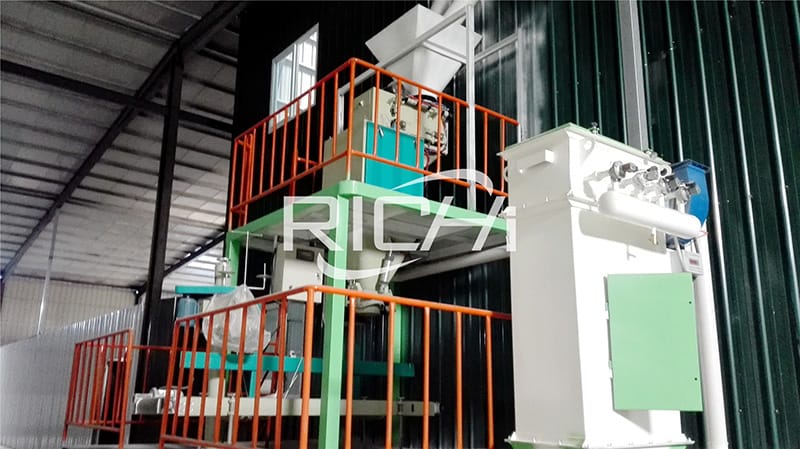
2. How to Start a Poultry Feed Production Line
A commercial feed production line should be started according to a documented sequence established for its specific equipment configuration.
In many feed processing systems, downstream conveying and receiving equipment must be available before upstream material feeding begins.
This helps prevent material accumulation and blockages.
Confirm System Readiness
Before startup, the operator should verify that the electrical control system indicates the required equipment is ready.
Any active faults, maintenance restrictions, or safety interlock problems must be resolved before production begins.
Start Supporting Systems
Supporting equipment such as ventilation, dust collection, and other required auxiliary systems should be placed into operation according to the approved plant startup sequence.
Start the Processing Equipment
Conveyors, mixers, pelletizing equipment, coolers, and other machines should be started in the sequence specified by the plant control logic and equipment manuals.
The correct sequence depends on the actual material flow arrangement and installed interlocks.
Introduce Material Gradually
Once the required equipment is operating normally, feed material can be introduced according to the approved operating procedure.
Operators should monitor motor loading, feeding stability, and equipment response during the initial production period.
Stabilize the Production Process
After startup, production parameters should be adjusted within the permitted operating range to achieve stable output and acceptable finished feed quality.
Do not increase feed rates or change pellet mill settings beyond the manufacturer's operating limits.
3. Important Parameters to Monitor During Feed Production
Regular monitoring helps operators identify production changes before they develop into equipment failures or product quality problems.
| Parameter | Why It Matters |
|---|---|
| Hourly Production Output | Indicates production performance against the planned target |
| Motor Current and Load | Helps identify abnormal loading conditions |
| Raw Material Feed Rate | Supports stable material flow |
| Grinding Particle Size | Influences mixing and pelletizing performance |
| Batching Accuracy | Supports formulation consistency |
| Conditioning Temperature | Helps control material preparation before pelletizing |
| Conditioning Moisture | Influences pellet formation and process stability |
| Pellet Temperature | Helps assess pelletizing and cooling conditions |
| Pellet Durability | Indicates resistance to handling damage |
| Fines Percentage | Helps assess pellet breakage and screening performance |
| Equipment Vibration and Noise | Can indicate developing mechanical problems |
Monitoring frequency and acceptable operating limits should be defined by the plant's technical procedures and quality control requirements.
4. Poultry Feed Pellet Mill Operating Checks
The pellet mill is one of the most important machines in a commercial poultry feed production line.
During operation, the pellet mill should be monitored for stable material feeding, motor loading, conditioning performance, and pellet quality.
Monitor Motor Current
Motor current provides useful information about pellet mill loading.
Unexpected changes or sustained abnormal current may indicate changes in material flow, pelletizing resistance, or mechanical condition.
However, stable current alone does not guarantee that the machine is operating correctly. Operators should evaluate other process indicators at the same time.
Check Feed Distribution
Uneven material feeding can affect pelletizing stability.
Feed distribution equipment should be maintained according to the manufacturer's requirements.
Monitor Ring Die and Roller Performance
Ring die and roller condition affects pellet formation and equipment performance.
Excessive wear, incorrect adjustment, or material blockage may reduce output and increase operating problems.
Inspection and adjustment should be performed only under the appropriate safe maintenance conditions.
Observe Pellet Quality
Operators should monitor finished pellet appearance, size, fines content, and other relevant quality indicators.
Unexpected changes may indicate problems with grinding, conditioning, pelletizing, or cooling.
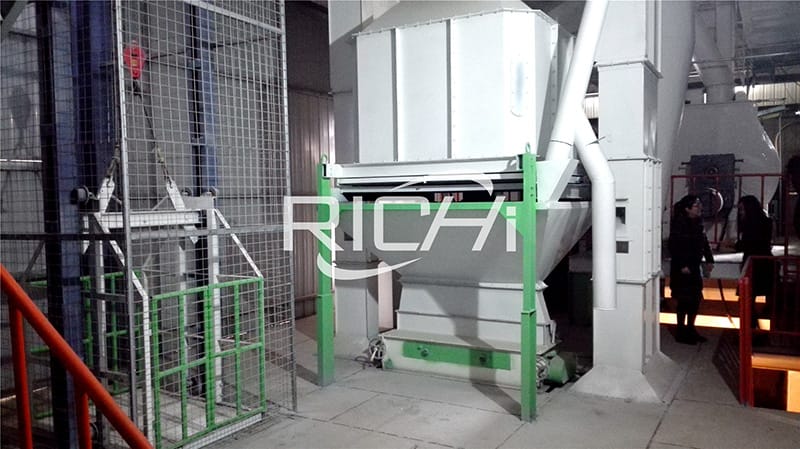
5. Poultry Feed Quality Control During Production
Finished feed quality depends on the entire manufacturing process rather than pelletizing equipment alone.
Commercial feed factories should establish appropriate inspection and sampling procedures.
Raw Material Quality
Incoming ingredients should be evaluated according to the plant's raw material acceptance criteria.
Relevant factors may include moisture, contamination, particle characteristics, and ingredient identity.
Batching Accuracy
Ingredient weighing should be checked against the approved formulation.
Incorrect batching may affect nutritional consistency and finished feed specifications.
Mixing Uniformity
Mixing performance should be verified according to the plant's quality assurance procedures.
Suitable testing methods may be used to evaluate whether the mixer provides the required ingredient distribution.
Pellet Durability
Pellet durability testing helps assess the resistance of pellets to breakage during handling and transportation.
Results should be interpreted according to the intended feed product and relevant testing method.
Pellet Cooling
Finished pellets should be cooled sufficiently before storage and packaging.
Cooling performance depends on airflow, pellet characteristics, ambient conditions, and equipment settings.
Fines and Broken Pellets
Excessive fines may indicate problems with pellet formation, cooling, conveying, or screening.
Operators should investigate the cause rather than simply increasing pellet mill loading.
6. Production Records and Shift Management
Accurate production records support quality control, maintenance planning, and operational analysis.
A commercial poultry feed mill should establish a consistent method for recording important operating information.
Recommended Production Record Items
- Production date and shift.
- Feed product name or formula code.
- Production start and stop times.
- Raw material batch information.
- Hourly or shift production output.
- Relevant conditioning parameters.
- Pellet mill motor loading.
- Pellet temperature.
- Pellet durability test results, where applicable.
- Fines percentage.
- Equipment alarms and abnormal conditions.
- Maintenance actions.
- Operator and supervisor identification.
The required recording frequency should reflect the plant's quality management system and operating procedures.
Production records can help identify recurring problems, compare performance between shifts, and support continuous process improvement.
7. Common Poultry Feed Mill Problems and Troubleshooting
Feed manufacturing problems can arise from raw material variation, equipment wear, incorrect operating parameters, or material flow interruptions.
The following table summarizes common symptoms and areas that may require investigation.
| Problem | Possible Causes | Recommended Investigation |
|---|---|---|
| Low Pellet Mill Output | Material characteristics, restricted feed flow, die condition or operating settings | Check process records and inspect the system according to maintenance procedures |
| Excessive Pellet Fines | Inadequate pellet formation, handling damage or screening problems | Review conditioning, pelletizing, cooling and conveying conditions |
| High Motor Current | Excessive loading, abnormal material resistance or mechanical problems | Follow the equipment fault response procedure and investigate safely |
| Unstable Material Feeding | Bin flow problems, feeder condition or material variation | Inspect material handling and feeding systems |
| High Finished Pellet Temperature | Insufficient cooling or abnormal cooling airflow | Check cooler operation and relevant process parameters |
| Abnormal Vibration | Mechanical wear, misalignment or other equipment faults | Stop or isolate affected equipment as required and arrange qualified inspection |
| Frequent Blockages | Incorrect material flow, equipment restrictions or process imbalance | Review equipment sequencing, feeding rates and blockage locations |
Operators should not bypass safety interlocks, remove guards, or attempt to clear blockages while machinery is running.
Fault investigation and maintenance should follow approved lockout and isolation procedures.
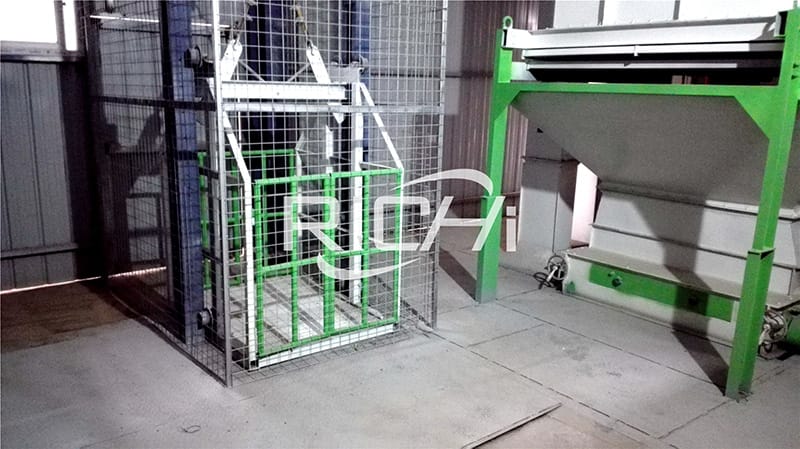
8. How to Shut Down a Poultry Feed Production Line Safely
Shutdown procedures should be established according to the actual equipment arrangement and control system.
A planned shutdown normally requires controlled reduction of material feeding, appropriate clearing of processing equipment, and orderly stopping of machinery.
Stop Introducing New Raw Materials
Material feeding should be reduced or stopped according to the plant's approved shutdown procedure.
Allow Processing Equipment to Clear
Where specified by the manufacturer, equipment should be allowed to process or discharge remaining material before shutdown.
The required clearing procedure depends on the equipment and feed formulation.
Coordinate Downstream Equipment
Coolers, screens, conveyors, and other downstream machines should be operated and stopped according to the approved plant sequence.
Stopping equipment in the wrong order can cause unnecessary material accumulation.
Complete Equipment Shutdown
Once material handling is complete, machinery should be stopped according to the approved operating procedure.
Emergency shutdown procedures are separate from routine shutdown and must be followed whenever an unsafe condition occurs.
Perform Post-Shutdown Inspection
After the equipment has been safely stopped and isolated where required, trained personnel can inspect for residual material, abnormal wear, or other maintenance issues.
Cleaning or internal inspection must not begin until hazardous energy has been controlled.
9. Routine Maintenance for Poultry Feed Mill Equipment
Preventive maintenance helps reduce unexpected breakdowns and supports reliable production.
Maintenance intervals should be determined by the equipment manufacturer's recommendations, operating hours, material characteristics, and actual machine condition.
Daily Maintenance
- Inspect equipment for visible damage and abnormal conditions.
- Check lubrication system status where applicable.
- Review alarms and operating records.
- Clean accessible production areas using approved methods.
- Check for material leakage and dust accumulation.
- Report abnormal noise, vibration or temperature.
Periodic Mechanical Maintenance
- Inspect hammer mill wear parts.
- Check mixer condition and discharge mechanisms.
- Inspect pellet mill ring dies and rollers.
- Check bearings, transmissions and drive components.
- Inspect conveyor components.
- Check cooling and screening equipment.
- Inspect dust collection systems.
Electrical and Automation Maintenance
Qualified personnel should inspect electrical connections, sensors, motor protection systems, safety interlocks, and control equipment according to the maintenance plan.
Unauthorized modifications to control logic or protective devices should not be made.
Spare Parts Management
Feed manufacturers should identify critical spare parts and maintain appropriate inventory according to operating requirements.
Common wear components may include hammer mill hammers and screens, pellet mill ring dies and rollers, and other equipment-specific parts.
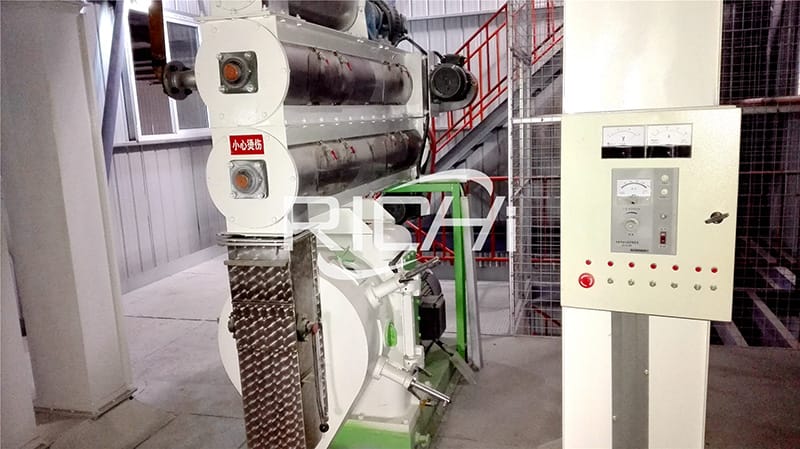
10. Operator Training and Industrial Safety
Commercial feed manufacturing facilities should establish suitable operator training and industrial safety procedures.
Training should cover normal operation, process monitoring, emergency response, equipment isolation, and relevant maintenance restrictions.
Machine Guarding
Moving machinery should be protected by appropriate guards and safety devices.
Lockout and Energy Isolation
Maintenance, internal inspection, and blockage removal should be performed only after the equipment has been safely isolated from hazardous energy sources.
Combustible Dust Management
Feed dust can present fire and explosion hazards under certain conditions.
Factories should implement appropriate dust control, housekeeping, equipment protection, and risk management measures.
Emergency Response
Operators should understand the location and proper use of emergency stop devices and follow the plant's emergency response procedures.
Personal Protective Equipment
Appropriate protective equipment should be selected according to workplace hazards and applicable safety requirements.
11. How to Improve Poultry Feed Mill Operating Efficiency
Improving feed mill performance requires coordinated management of equipment, raw materials, personnel, and production schedules.
Maintain Consistent Raw Material Quality
Significant variation in raw material characteristics can affect grinding, mixing, conditioning, and pelletizing.
Optimize Production Scheduling
Grouping similar feed formulas may reduce unnecessary product changeovers and cleaning requirements, provided feed safety and cross-contamination controls are maintained.
Monitor Equipment Performance
Review production output, motor loading, energy consumption, downtime, and quality results to identify opportunities for improvement.
Follow Preventive Maintenance Plans
Scheduled maintenance can help identify wear and developing equipment problems before they cause unplanned shutdowns.
Improve Operator Training
Well-trained operators are better equipped to recognize abnormal process conditions and respond according to established procedures.
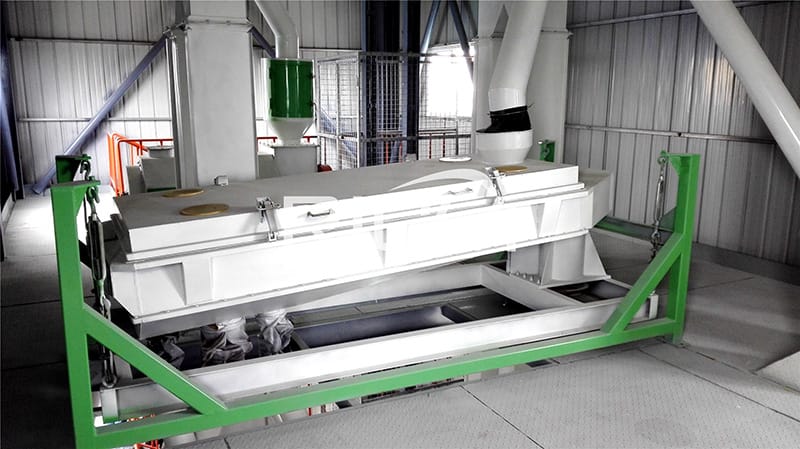
RICHI Poultry Feed Production Line Project References
RICHI Machinery has supplied feed processing equipment and complete production line solutions for commercial customers in different countries.
Selected project references include:
- Uzbekistan 3–5 T/H Poultry Feed Manufacturing Project.
- Ethiopia 5–6 T/H Powder Feed Production Line.
- Kenya 5 T/H Computerized Batching Feed Line.
- Zimbabwe 3–5 T/H Poultry Feed Pellet Production Line.
- Colombia 3–4 T/H Automatic Poultry Feed Production Line.
- Papua New Guinea 1–2 T/H Chicken Feed Pellet Production Line.
These projects represent different equipment configurations and production requirements. Operating procedures must be developed according to each factory's actual equipment and control systems.
Frequently Asked Questions About Poultry Feed Mill Operation
What Should Be Checked Before Starting a Poultry Feed Mill?
Operators should verify equipment readiness, material availability, safety devices, guards, lubrication status, conveying routes, dust collection systems, and control system conditions.
What Causes Frequent Pellet Mill Blockages?
Potential causes include unstable material feeding, inappropriate conditioning, feed formulation characteristics, equipment restrictions, or mechanical problems.
Blockages must be investigated using approved safety procedures.
How Often Should Poultry Feed Mill Equipment Be Maintained?
Maintenance frequency depends on the equipment model, operating hours, material characteristics, and manufacturer recommendations.
Why Is Pellet Durability Important?
Pellet durability helps indicate how well pellets withstand handling and transportation.
It is one of several quality indicators used in commercial feed manufacturing.
Can a 1–10 T/H Feed Mill Be Operated Automatically?
Yes. Depending on the equipment configuration, commercial feed production lines can incorporate automated batching, process control, monitoring, and packaging systems.
Does Every Poultry Feed Mill Use the Same Startup Sequence?
No. Startup and shutdown sequences depend on the actual equipment arrangement, process design, safety interlocks, and control system.
Get Technical Support for Your Poultry Feed Production Line
Are you planning to establish a commercial poultry feed mill or upgrade an existing production line?
RICHI Machinery provides industrial feed processing equipment, customized process designs, and technical support for commercial feed manufacturing projects.
To discuss your requirements, please provide:
- Your required production capacity in tons per hour.
- The types of poultry feed you want to manufacture.
- Your main raw materials.
- Whether you need mash feed, pellet feed, or both.
- Your existing equipment configuration, if applicable.
- Your country and local electrical supply.
- Whether you need a complete production line or equipment upgrades.
Our sales and engineering team can help evaluate your project and prepare a suitable equipment configuration and technical proposal.
RICHI Machinery – Industrial Poultry Feed Mill Equipment and Production Line Solutions