How To Start Your Complete Cattle Feed Pellet Making Plant Business?
Starting a complete cattle feed pellet making plant is a promising business opportunity today, as the global demand for healthy cattle feed continues to grow. With rising consumption of meat products worldwide, ensuring a stable and efficient supply of nutritious cattle feed has become increasingly important.
However, starting a cattle feed manufacturing plant requires clear planning, suitable equipment selection, and an understanding of production capacity and feed formulation. Below is a practical guide to help you enter this industry smoothly.
What Is the Output Capacity of a Common Cattle Feed Mill Factory?
The production capacity of a cattle feed pellet plant can be flexibly designed according to market demand, investment budget, and factory conditions. Common configurations include:
- 1–2 t/h cattle feed pellet making plant (1000–2000 kg/h)
- 3 t/h fully automatic cattle feed pellet plant
- 5 t/h cattle feed pellet production line
- 10 t/h complete cattle feed pellet line
- 12 t/h livestock cattle feed pellet plant
- 30 t/h automatic complete cattle feed pellet production line
These configurations can be customized based on raw material types, feeding formulas, automation level, and packaging requirements.
Why Cattle Feed Pellets Are Essential for Healthy Livestock Growth
Healthy cattle are the foundation of high-quality meat production. Different growth stages of cattle require different nutrient compositions, which are difficult to achieve through traditional feeding methods alone.
Cattle feed pellets provide a balanced and scientifically formulated nutrition source, ensuring cattle receive adequate protein, fiber, energy, vitamins, and minerals for healthy growth and higher feed conversion efficiency.
Commercial Cattle Feed Pellet Making Machine for Sale
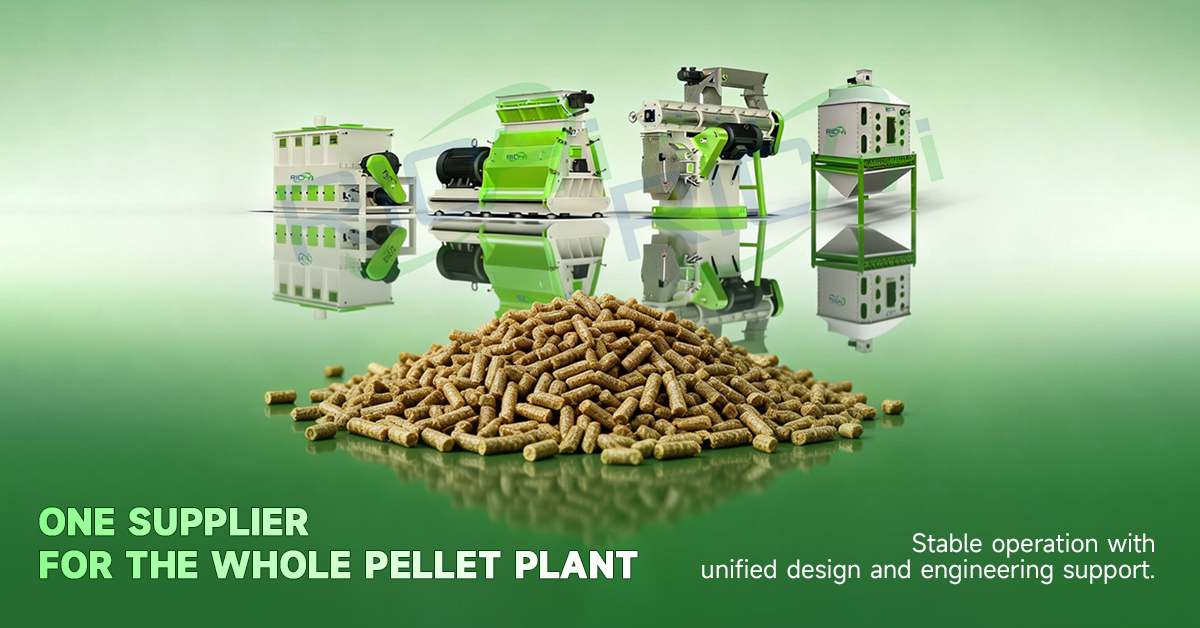
A cattle feed pellet processing machine is a type of animal feed pellet milling machine that compresses mixed raw materials into uniform pellets.
Common raw materials used in cattle feed pellet production include:
- Hay and alfalfa
- Hops and wet grass
- Rice husk and corn/maize
- Cotton stalk and cottonseed husk
- Peanut shell and oil cake
Main Advantages of Cattle Feed Pellet Manufacturing Machines
- Reasonable structure design, simple operation, and low noise
- Safe, reliable performance with easy operation and maintenance
- High output with low energy consumption and high pelletizing efficiency
- Pellets with high hardness, smooth surface, easy transportation and storage
- Multiple die options suitable for different raw materials
- Strong adaptability to working sites with long service life
To improve overall production efficiency, a complete cattle feed pellet production line usually includes auxiliary equipment such as grinding machines, mixers, pellet coolers, conveyors, and automatic packing systems.
Step-by-Step Guidance to Set Up a Cattle Feed Producing Plant
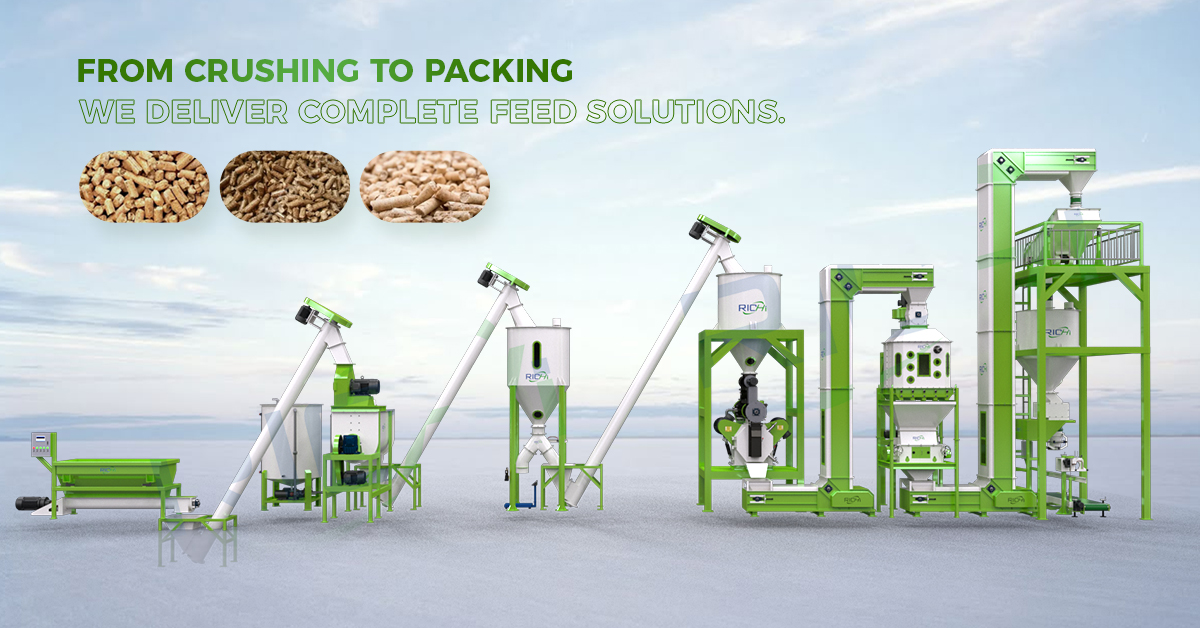
Research shows that starting a cattle feed pellet production plant with proper planning can be a highly profitable business. Below are the essential steps to get started.
Step 1: Create a Clear Business Strategy
Market research is the foundation of a successful feed mill business. Analyze local cattle farming demand, study competitors’ production capacity and pricing, and calculate your expected investment and operating costs in advance.
Step 2: Select Suitable Raw Materials
Choose raw materials based on local availability, cost, and nutritional value. The feed formula should meet cattle growth requirements at different stages. Common ingredients include soybean meal, wheat bran, corn, and mineral additives.
Step 3: Purchase Reliable Cattle Feed Pellet Making Equipment
For stable production and consistent pellet quality, investing in efficient and easy-to-operate feed pellet machinery is crucial. Operators should also receive proper training to ensure safe and effective operation.
Step 4: Produce Pellets in Your Desired Size
By adjusting dies and blades on the pellet machine, you can produce cattle feed pellets in different diameters to suit calves, beef cattle, or dairy cows. Accurate ingredient proportioning ensures optimal nutritional balance.
Step 5: Packaging and Market Distribution
Finally, pellets are cooled, screened, and packed into bags for storage and sale. Proper packaging improves product appearance, shelf life, and market competitiveness.
Nutritive Composition and Nutritive Value of Common Cattle Feed Materials
| Feed | Dry Mstter % | NEL | UIP % | ADF % | eNDF % |
|---|---|---|---|---|---|
| Alfalfa Cubes | 91 | 57 | 30 | 36 | 40 |
| Cottonseed Hulls | 90 | 44 | 48 | 71 | 100 |
| Corn Feed | 80 | 54 | 30 | 43 | 100 |
| Barley Hay | 90 | 57 | - | 37 | 98 |
| Cereal Feed | 89 | 93 | 48 | 7 | 9 |
Complete Cattle Feed Pellet Making Plant Business - You Should Know
1. How much investment is needed to start a cattle feed pellet plant?
The investment cost of a complete cattle feed pellet making plant mainly depends on production capacity, automation level, and local installation conditions.
- Small scale plants (1–2 t/h): suitable for local farms or regional feed supply, with relatively low initial investment.
- Medium scale plants (3–5 t/h): ideal for commercial feed producers serving multiple farms.
- Large scale plants (10–30 t/h): designed for industrial feed mills with high automation and stable long-term demand.
The total investment usually includes feed processing equipment, electrical control system, steel structure, installation, and auxiliary equipment such as cooling and packing systems.
2. What factory size is required for a cattle feed pellet production line?
Factory size depends on plant capacity, process layout, and raw material storage requirements. As a reference:
- 1–2 t/h plant: around 300–600 m²
- 3–5 t/h plant: around 800–1,500 m²
- 10–30 t/h plant: 2,000 m² or more
In addition to the production workshop, space for raw material storage, finished feed warehouse, and vehicle access should also be considered during planning.
3. What power supply is required for a cattle feed pellet plant?
Cattle feed pellet production lines generally require stable three-phase industrial electricity.
- Voltage: commonly 380V / 400V / 415V (customizable according to country)
- Frequency: 50Hz or 60Hz
- Power demand increases with capacity and equipment configuration
Before finalizing equipment selection, it is recommended to confirm local power supply conditions to ensure smooth operation.
4. Can the plant use different raw materials?
Yes. A well-designed cattle feed pellet plant can process a wide range of raw materials such as corn, wheat bran, soybean meal, alfalfa, grass, and agricultural by-products.
If multiple raw materials need to be mixed, a feed mixing system should be included to ensure uniform pellet quality and consistent nutritional value.
5. Is it necessary to choose a fully automatic cattle feed pellet plant?
Not necessarily. The choice between semi-automatic and fully automatic systems depends on labor cost, production scale, and management preferences.
- Semi-automatic systems: lower investment, suitable for small and medium plants
- Fully automatic systems: higher efficiency, stable quality, reduced labor dependence
6. What is the production efficiency and pellet quality like?
With proper formulation and equipment configuration, cattle feed pellets produced have uniform size, high density, good hardness, and excellent durability during transportation and storage.
Production efficiency is stable when raw material moisture and particle size meet recommended processing conditions.
7. How long does it take to recover the investment?
The return on investment depends on local feed prices, raw material cost, production scale, and market demand.
In many cases, a properly operated cattle feed pellet plant can recover its investment within a reasonable operating period, especially when production capacity is matched with stable sales channels.
8. Do you provide technical support and after-sales service?
Yes. Professional suppliers provide full technical support, including equipment selection, process design, installation guidance, operator training, and long-term after-sales service to ensure stable plant operation.
Factory Layout & Installation FAQ – Cattle Feed Pellet Plant
1. Do you provide factory layout design before equipment delivery?
Yes. A professional cattle feed pellet plant supplier will provide a preliminary factory layout based on your production capacity, available space, and process flow.
This layout helps you clearly understand equipment arrangement, material flow direction, and space utilization before installation begins.
2. What information is required to design a proper factory layout?
To design an accurate and practical layout, the following information is usually required:
- Factory building dimensions (length, width, height)
- Number of floors and available load-bearing capacity
- Planned production capacity (t/h)
- Main raw materials and storage method
- Local power supply and installation conditions
3. Can the production line be installed in an existing factory building?
Yes. Many cattle feed pellet plants are installed in existing workshops or renovated feed mills.
In such cases, the production process and equipment configuration are adjusted to fit the available space, while ensuring smooth material flow and safe operation.
4. Is it possible to install the plant in a multi-floor building?
Yes. Medium and large cattle feed pellet plants are often designed with multi-floor layouts to make use of gravity feeding and reduce conveying energy consumption.
However, the building structure and floor load capacity must be confirmed in advance to ensure installation safety.
5. How long does installation and commissioning usually take?
Installation time depends on plant capacity, automation level, and local labor conditions.
- Small plants (1–2 t/h): typically shorter installation period
- Medium plants (3–5 t/h): moderate installation and commissioning time
- Large plants (10–30 t/h): longer installation due to system complexity
After installation, commissioning and operator training are carried out to ensure stable production.
6. Do you provide on-site installation guidance?
Yes. Professional suppliers can arrange experienced engineers to provide on-site installation supervision, commissioning guidance, and technical training according to project requirements.
This ensures correct equipment installation, reduces trial-and-error costs, and helps the plant reach designed capacity faster.
7. Can the production line be expanded in the future?
Yes. Many cattle feed pellet plants are designed with future expansion in mind.
By reserving space for additional equipment and conveyors during the initial layout design, capacity upgrades can be implemented more efficiently when market demand increases.
8. What should be considered for raw material and finished feed storage?
Proper storage design is critical for stable production.
- Raw materials should be stored close to the feeding section to reduce handling distance
- Finished feed storage should allow easy loading and transportation
- Moisture control and ventilation should be considered to maintain feed quality
9. How do you ensure safety and maintenance accessibility?
During layout design, sufficient space is reserved for equipment operation, inspection, and maintenance.
Clear walkways, safety guards, and dust collection systems are also integrated to meet long-term operational safety requirements.
10. Can the layout be customized according to local regulations?
Yes. Factory layout and installation plans can be adjusted to comply with local safety standards, electrical regulations, and environmental requirements.
This helps avoid compliance issues and ensures smooth project implementation.
If you want to build a complete cattle feed pellet making plant, we can support you with process design, equipment selection, layout planning, and installation guidance. Share your capacity requirement, raw materials, and local power conditions to get a tailored solution.