Are you planning to establish a commercial feed production line capable of manufacturing both poultry and cattle feed? A 1-4 T/H poultry and cattle feed production line provides a flexible solution for livestock feed manufacturers, agricultural enterprises, and large-scale farming operations that need to produce different types of animal feed using shared processing equipment.
RICHI Machinery designs and manufactures industrial feed processing equipment and complete feed production lines for commercial projects. Depending on the raw materials, feed formulations, and production requirements, a properly configured plant can produce feed pellets for chickens, cattle, sheep, goats, and other livestock.
However, different animal feeds require different nutritional formulations, pellet specifications, and operating conditions. A combined poultry and cattle feed mill must therefore be designed with sufficient flexibility to accommodate product changeovers.
This guide explains how a 1-4 T/H combined feed production line works, which machines are required, how different feed products can be manufactured, and what factors influence equipment investment and plant configuration.
What Is a 1-4 T/H Poultry and Cattle Feed Production Line?
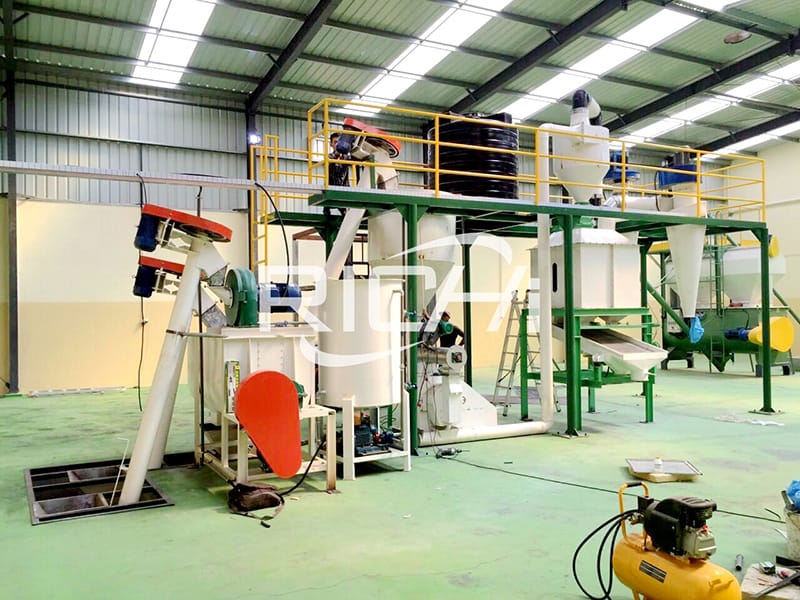
A 1-4 T/H poultry and cattle feed production line is an industrial processing system designed to manufacture formulated animal feed at a nominal capacity of approximately one to four tons per hour.
The production line typically includes raw material cleaning, grinding, batching, mixing, conditioning, pelletizing, cooling, screening, conveying, and packaging equipment.
For projects manufacturing multiple feed products, the process can be configured to accommodate different raw material characteristics, feed formulas, pellet diameters, and production schedules.
Actual hourly output may vary between poultry and cattle feed because different formulations have different grinding and pelletizing characteristics.
Why Build a Combined Poultry and Cattle Feed Mill?
Commercial feed businesses may need to serve multiple livestock markets rather than manufacture only one feed product.
A combined poultry and cattle feed production line can provide operational flexibility by sharing suitable processing equipment between different formulations.
Serve Different Livestock Feed Markets
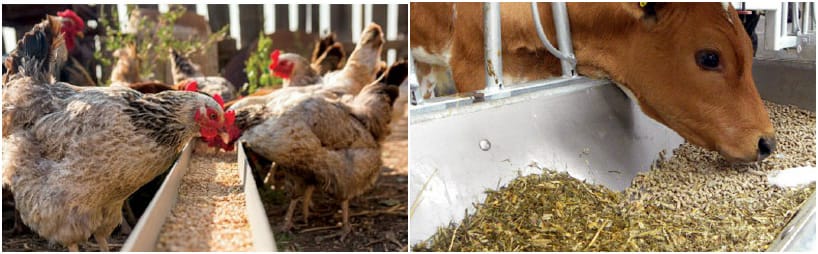
A suitably designed plant may manufacture feed for broilers, laying hens, beef cattle, dairy cows, sheep, and goats.
Each product requires an appropriate formulation and processing specification.
Share Core Processing Equipment
Grinding, batching, mixing, conveying, and certain pelletizing equipment can potentially be shared between different feed products.
Equipment compatibility must be evaluated during the initial design stage.
Adjust Production According to Market Demand
Manufacturers can organize production schedules according to customer orders and feed demand.
For example, a plant may manufacture poultry feed during one production period and cattle feed during another, provided that appropriate changeover and cleaning procedures are followed.
Support Future Product Expansion
When the factory layout and equipment configuration allow, additional feed formulations may be introduced without replacing the entire production line.
Technical Specifications of a 1-4 T/H Combined Feed Plant
| Production Capacity | 1-4 T/H, depending on equipment configuration and feed formula |
| Finished Products | Poultry feed, cattle feed and other suitable livestock feed pellets |
| Pellet Diameter | Customized according to animal type and feed requirements |
| Raw Materials | Corn, wheat, soybean meal, bran, suitable forage ingredients, minerals and premixes |
| Pellet Mill | Industrial ring die feed pellet mill |
| Batching System | Manual, semi-automatic or automatic |
| Control System | Electrical control or customized automation |
| Packaging | Manual or automatic bagging |
| Power Supply | Industrial three-phase electricity |
| Application | Commercial livestock feed manufacturing |
The final technical specifications depend on the selected feed formulas, required pellet sizes, production capacity, and automation requirements.
Can One Production Line Make Both Poultry and Cattle Feed?
Yes. A properly designed feed manufacturing line can produce different livestock feed products using shared processing equipment.
However, changing the feed formula alone may not be sufficient.
The manufacturer must also consider pellet diameter, grinding particle size, conditioning requirements, ring die specifications, and cleaning procedures.
Different Feed Formulations
Poultry and cattle have different nutritional requirements.
Broiler feed, layer feed, beef cattle feed, and dairy cattle feed must be formulated according to their intended nutritional applications.
Different Pellet Diameters
Poultry feed generally requires smaller pellet sizes than many cattle feed applications.
Pellet diameter should be selected according to animal age, feeding requirements, and the intended finished product.
Ring Die Replacement
When different pellet diameters are required, changing the ring die may be necessary.
The pellet mill must be compatible with the selected ring die specifications.
Conditioning Adjustments
Different feed formulations may require different steam conditioning parameters.
Temperature, moisture, retention time, and other operating conditions should be adjusted according to the material characteristics and finished pellet requirements.
Production Changeover and Cleaning
When switching between poultry and cattle feed, manufacturers should follow appropriate cleaning and production sequencing procedures.
These measures help reduce unintended ingredient carryover and maintain product quality.
Where specialized additives or restricted ingredients are used, additional segregation and regulatory controls may be required.
Main Equipment in a 1-4 T/H Poultry and Cattle Feed Production Line
A commercial combined feed production line typically requires several interconnected processing systems.
| Equipment | Function |
|---|---|
| Feed Hammer Mill | Crushes grains and suitable raw materials |
| Batching and Weighing System | Measures ingredients according to different feed formulas |
| Feed Mixer | Mixes different ingredients uniformly |
| Ring Die Feed Pellet Mill | Manufactures feed pellets with the selected die specifications |
| Feed Conditioner | Prepares mixed feed for pelletizing |
| Counterflow Pellet Cooler | Cools pellets after production |
| Pellet Screening Machine | Separates qualified pellets from fines |
| Packaging Equipment | Weighs and packs finished feed |
| Conveying Equipment | Transfers materials between processing stages |
| Electrical Control System | Coordinates equipment operation |
The exact machinery configuration depends on whether the plant will manufacture poultry feed, cattle feed, or multiple livestock feed products.
How Does a Combined Poultry and Cattle Feed Production Line Work?
The typical feed manufacturing process includes:
Raw Material Receiving → Cleaning → Grinding → Batching → Mixing → Conditioning → Pelletizing → Cooling → Screening → Packaging
Depending on the intended products, the production line may also include fiber preparation, micro-ingredient dosing, liquid addition, and other auxiliary systems.
1. Raw Material Cleaning and Preparation
Incoming raw materials are inspected and cleaned before entering the processing system.
Different materials may require different preparation methods.
For example, grains can be processed using conventional feed grinding equipment, while long fibrous materials may require cutting or pre-crushing.
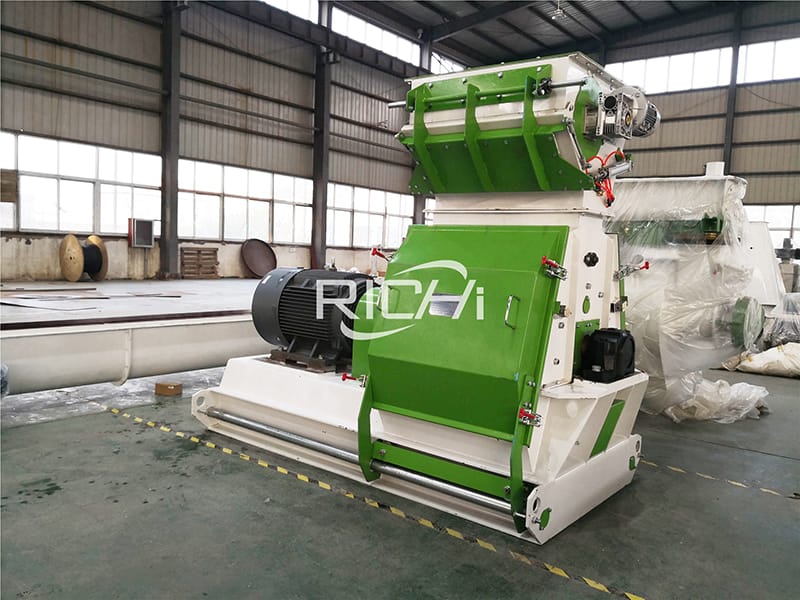
2. Feed Grinding
A hammer mill reduces suitable raw materials to the required particle size.
The grinding specification should be adjusted according to the feed formulation and pellet diameter.
Different livestock feed products may require different particle size distributions.
3. Batching and Ingredient Weighing
Raw materials are weighed according to the selected feed formula.
For multi-product feed factories, the batching system should support different recipes and ingredient quantities.
Automatic batching can help improve consistency and reduce manual handling.
Micro-ingredients may require dedicated weighing or premixing procedures.
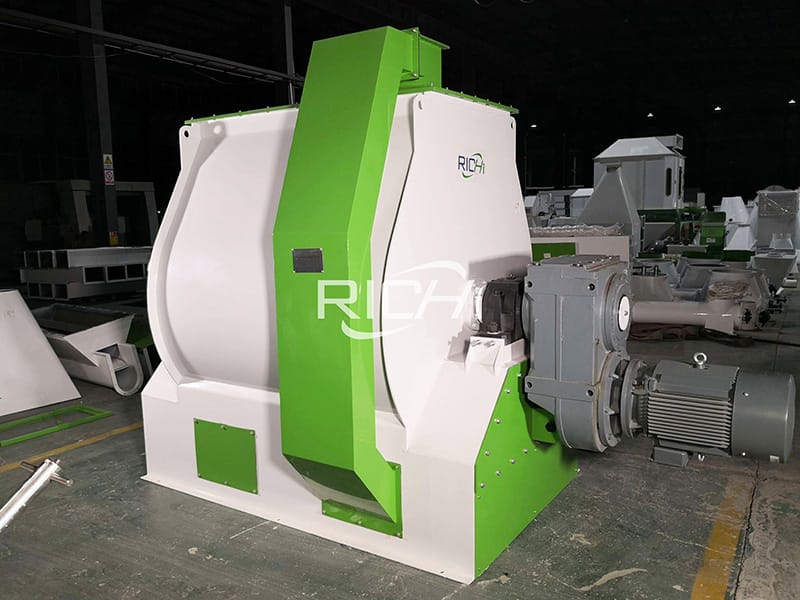
4. Feed Mixing
After batching, ingredients enter the feed mixer.
The mixing system distributes the ingredients throughout the batch to produce a consistent feed mixture.
Mixing time and performance should be evaluated according to the equipment and formulation.
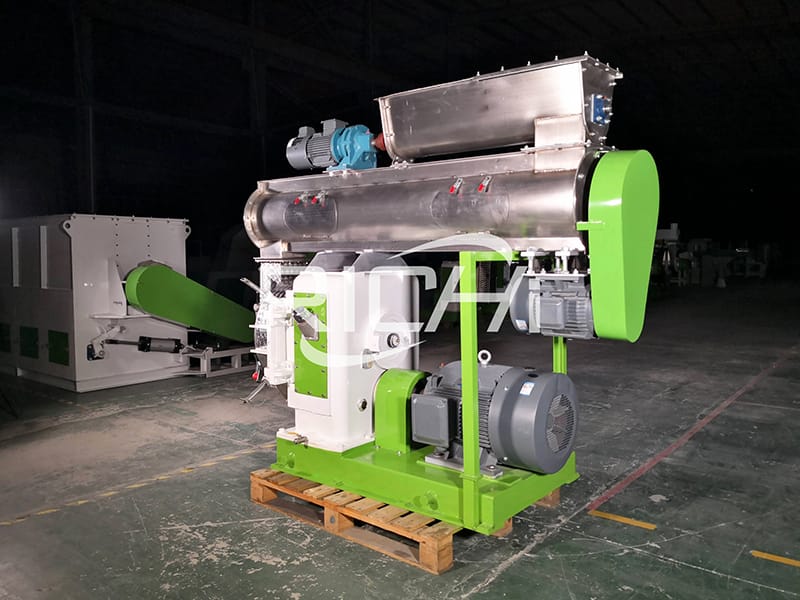
5. Conditioning and Pelletizing
The mixed feed enters a conditioner, where steam may be added to prepare the material for pellet formation.
The conditioned material then enters an industrial ring die pellet mill.
Inside the pelletizing chamber, rollers compress the feed through the ring die openings to produce pellets.
When manufacturing different products, operators may need to adjust the die specification, conditioning parameters, and machine settings.
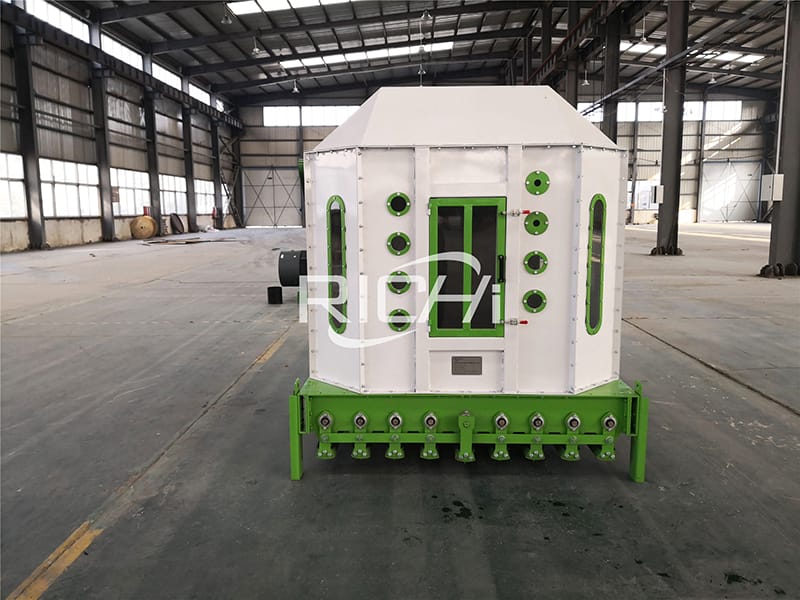
6. Pellet Cooling
Freshly produced pellets leave the pellet mill at an elevated temperature.
A counterflow cooler reduces pellet temperature and helps stabilize the finished product before screening and packaging.
Cooling performance depends on airflow, pellet characteristics, operating conditions, and equipment configuration.
7. Screening and Packaging
The screening system separates qualified pellets from fines and broken particles.
Finished feed can then be packed into bags or transferred to bulk storage.
For commercial feed factories, packaging systems can be configured according to local market requirements.
What Raw Materials Can Be Used?
A combined poultry and cattle feed plant can process a variety of suitable feed ingredients.
Common raw materials include:
- Corn and maize.
- Wheat and barley.
- Wheat bran.
- Rice bran.
- Soybean meal.
- Sunflower meal.
- Rapeseed meal.
- Suitable cottonseed products.
- Alfalfa.
- Grass meal.
- Suitable straw and forage materials.
- Minerals and vitamin premixes.
- Other approved feed ingredients.
Not all ingredients are suitable for all animal species.
For example, fibrous materials that may be appropriate in certain ruminant feed formulations are not necessarily suitable for poultry feed at the same inclusion rates.
Raw materials must be selected according to nutritional requirements, feed safety standards, and processing suitability.
How to Manage Different Feed Products in One Factory
Manufacturing multiple livestock feed products requires more than changing the ingredients.
A commercial feed plant should establish appropriate production management procedures.
Recipe Management
Each feed product should have a clearly defined formulation and production specification.
Automated batching systems can support recipe selection and ingredient weighing.
Production Scheduling
Different products should be scheduled according to production demand and changeover requirements.
Grouping similar formulations may reduce unnecessary equipment adjustments and cleaning operations.
Ring Die and Equipment Adjustments
When changing pellet diameter or feed characteristics, operators may need to replace the ring die and adjust machine settings.
Cleaning and Cross-Contamination Control
Appropriate cleaning procedures should be followed when changing feed formulas.
Particular attention should be given to ingredients that are unsuitable or restricted for certain animal species.
Finished Product Identification
Different feed products should be clearly identified, packaged, and stored according to their intended applications.
1-4 T/H Poultry and Cattle Feed Production Line Cost
The cost of a combined poultry and cattle feed production line depends on the selected capacity, machinery configuration, automation level, and raw material processing requirements.
For preliminary planning, commercial feed production line equipment within this capacity range may require an investment ranging from several tens of thousands of US dollars to significantly higher amounts for more automated or complex configurations.
A complete quotation should be based on the customer's specific project requirements.
Factors Affecting Equipment Investment
- Required hourly production capacity.
- Types of animal feed to be manufactured.
- Raw material characteristics.
- Grinding and fiber preparation requirements.
- Number of feed formulations.
- Batching and mixing automation.
- Pelletizing equipment configuration.
- Packaging requirements.
- Electrical control system.
- Factory layout and auxiliary equipment.
Factory construction, transportation, installation, utilities, and working capital should also be considered when evaluating total project investment.
How Much Feed Can a 1-4 T/H Plant Produce Per Day?
| Hourly Capacity | 8 Hours/Day | 16 Hours/Day |
|---|---|---|
| 1 T/H | 8 tons | 16 tons |
| 2 T/H | 16 tons | 32 tons |
| 3 T/H | 24 tons | 48 tons |
| 4 T/H | 32 tons | 64 tons |
These figures represent theoretical output at full rated capacity. Actual production depends on equipment utilization, feed formula, operating conditions, maintenance, and product changeovers.
Factory Requirements for a 1-4 T/H Feed Production Line
Industrial feed manufacturing equipment normally requires three-phase electricity.
The factory should provide adequate space for raw material storage, production equipment, finished feed handling, maintenance, and future expansion.
Before selecting machinery, customers should confirm:
- Available land or workshop dimensions.
- Local voltage and frequency.
- Raw material receiving methods.
- Finished feed packaging requirements.
- Operating hours per day.
- Expected number of feed products.
- Automation requirements.
- Future capacity expansion plans.
RICHI Machinery can evaluate these conditions and prepare a customized equipment arrangement.
Advantages of Industrial Ring Die Feed Pelletizing Equipment
Industrial ring die pellet mills are designed for integration into commercial feed production systems.
Depending on the formulation and operating conditions, pelletizing can provide advantages in feed handling, storage, transportation, and product consistency.
Important factors affecting pellet quality include:
- Raw material particle size.
- Feed formulation.
- Material moisture.
- Conditioning parameters.
- Ring die specifications.
- Roller adjustment.
- Cooling performance.
Pelletizing does not automatically improve every feed formulation or guarantee better animal growth. Nutritional performance depends on the complete diet and feeding management.
Why Choose RICHI Machinery?
RICHI Machinery provides industrial feed pellet mills and customized feed manufacturing systems for commercial projects.
Our engineering services can include:
- Production requirement analysis.
- Raw material evaluation.
- Feed process design.
- Equipment selection.
- Factory layout planning.
- Electrical control system configuration.
- Installation guidance.
- Commissioning support.
- Spare parts and technical assistance.
For customers requiring dedicated production systems, RICHI also provides poultry feed production line solutions and ruminant feed production line solutions.
Frequently Asked Questions
Can One Feed Pellet Machine Produce Both Poultry and Cattle Feed?
Yes, if the pellet mill is suitable for both formulations and the required pellet specifications.
Different products may require ring die replacement and operating adjustments.
Can the Same Feed Mixer Be Used for Different Feed Formulas?
Yes. A properly selected feed mixer can process different formulations, provided suitable production sequencing and cleaning procedures are followed.
Do Poultry and Cattle Feed Require Different Pellet Sizes?
Often, yes. Pellet size depends on animal type, age, feed formulation, and feeding requirements.
Can I Manufacture Mash Feed and Pellet Feed in the Same Factory?
Yes. A properly designed plant may include process arrangements that allow mixed mash feed to be discharged or packaged before the pelletizing stage.
This requirement should be confirmed during the initial equipment design.
Does a Combined Feed Plant Require Three-Phase Electricity?
Industrial feed processing equipment normally requires three-phase electricity. The electrical configuration should match local voltage and frequency.
Can I Expand the Production Capacity Later?
Yes. Future expansion can be considered during the initial factory design by reserving suitable workshop space, electrical capacity, and equipment interfaces.
Get a Customized 1-4 T/H Poultry and Cattle Feed Production Line Quotation
Are you planning to manufacture poultry and cattle feed using one commercial production system?
RICHI Machinery can provide customized equipment configurations and complete feed manufacturing solutions according to your project requirements.
To receive a suitable proposal, please provide:
- What types of animal feed do you want to manufacture?
- What raw materials will you use?
- How many tons per hour do you want to produce?
- What pellet diameters are required?
- Do you need to produce both mash feed and pellet feed?
- How many different feed formulations will you manufacture?
- Which country will the equipment be installed in?
- What is the local voltage and frequency?
- Do you have an existing workshop?
- Do you require manual or automatic batching and packaging?
Based on your requirements, our sales and engineering team can prepare a suitable production process, equipment configuration, factory layout, and quotation.
RICHI Machinery – Commercial Poultry and Cattle Feed Production Line Solutions