
Chicken manure is a low-cost organic material that has historically been used in some livestock feeding systems after appropriate treatment. Especially when conventional protein feed ingredients are expensive, properly processed chicken manure may be considered as a partial alternative ingredient in certain ruminant feeding applications. However, raw chicken manure should not be fed directly. Its moisture, pathogens, odor, impurities and unstable composition make controlled processing essential. For commercial utilization, the focus should therefore be not only on natural silage fermentation, but on building a complete chicken manure feed processing system that can handle raw material preparation, mixing, fermentation and, when required, pellet production.
For farms, livestock operations and commercial feed processing projects that need continuous production, RICHI Machinery can configure chicken manure feed processing equipment according to the characteristics of the raw materials, required treatment process, target feed form and planned production capacity. The actual process may include dewatering or moisture adjustment, crushing, proportioning, mixing, fermentation, pelletizing, cooling, screening and packaging.
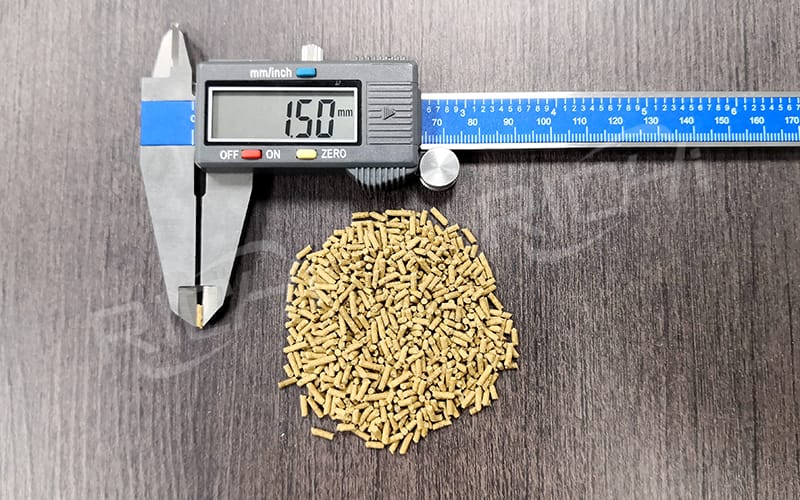
Chicken Manure Feed Processing Equipment and Production Process
The original natural silage method is suitable for understanding the basic fermentation principle, but commercial production requires better control of raw material uniformity, moisture, mixing and handling efficiency. The equipment configuration should be selected according to whether fresh or semi-dried chicken manure is used, what auxiliary feed materials are added, and whether the final product is fermented material, mash feed or feed pellets.
- Raw material receiving and pretreatment:
- Fresh chicken manure may contain excessive moisture and impurities. Depending on its condition, pretreatment can include impurity removal, dewatering, moisture adjustment or temporary storage before mixing.
- Forage, straw, barley, bran and other auxiliary materials may need crushing before they can be mixed uniformly with chicken manure.
- Crushing section:
- When straw, forage, grains or other coarse ingredients are included in the formula, a crusher or hammer mill can reduce them to a more suitable particle size for subsequent mixing and processing.
- Uniform particle size helps improve mixing consistency and makes material handling easier in a continuous production system.
- Batching and mixing section:
- A feed mixer is one of the key machines in a commercial chicken manure feed processing line. Chicken manure and auxiliary ingredients need to be proportioned and mixed evenly before fermentation.
- The mixing system can be configured according to the required formula and production capacity. Moisture should also be adjusted at this stage according to the selected fermentation process.
- Fermentation section:
- The mixed material is transferred to a suitable fermentation container or system. Traditional silage containers can be tanks, ponds or silage towers.
- Fermentation conditions, sealing, moisture and temperature need to be controlled according to the selected process. Commercial projects should establish a stable process rather than relying only on manual judgment.
- Pelletizing section (optional):
- If the project requires a uniform, easier-to-handle finished feed, the properly treated material can be incorporated into an appropriate feed formulation and further processed through a feed pellet production system.
- The exact pelletizing process depends on the final formulation, moisture, target animal, pellet size and local feed-safety requirements. Fermented chicken manure should not simply be sent directly into a pellet mill without confirming that the material condition and formulation are suitable.
- Cooling, screening and packing section (for pellet production):
- After pelletizing, pellets normally need to be cooled and screened before storage or packaging.
- For commercial feed plants, an automatic weighing and packing system can be added according to the required bag size and production capacity.
Natural Silage Fermentation Methods for Chicken Manure
The principle and production of this method are similar to the conventional silage method. Chicken manure silage containers can be tanks, ponds or silage towers. The following formulas are retained from the original article as examples of traditional fermentation approaches. Actual commercial use should be validated according to raw-material conditions, animal species, veterinary guidance and applicable local feed regulations.
Formula 1: Chicken Manure, Forage or Straw Powder and Bran
First mix 70% chicken manure, 20% forage or straw powder and 10% bran. Mix according to the proportion and adjust the moisture content to about 60% (traditionally judged by holding the material and observing water traces without dripping). Then put the material into the fermentation container and seal it for 4-6 weeks. After silage fermentation, the material may appear yellow to yellow-green and develop a fermented odor, while palatability can be improved.
For commercial production, this formula is better handled with crushing, proportioning and mixing equipment so that the straw powder, bran and chicken manure are distributed more uniformly. Pathogen control and finished-feed safety should be confirmed through appropriate testing rather than appearance or odor alone.
Formula 2: Fresh Chicken Manure and Bran
Mix fresh chicken manure and bran at a ratio of 3:2, or mix chicken manure with crushed barley grains as described in the original method. Control the moisture to about 50%, put the material into a silo, seal and ferment, and keep the temperature above 5°C. The original method specifies a fermentation period of approximately 20 to 40 days. This type of silage can then be mixed with straw and hay to improve palatability.
If this method is used at a larger scale, a crusher for barley or other grains, a batching system and a feed mixer can reduce manual handling and improve batch consistency.
Formula 3: Chicken Manure and Turf Mixing Silage
In the traditional method, turf is cut to a length of about 5 cm before chicken manure is collected with it. The mixture of turf and chicken manure is fermented before feeding. The type and amount of bedding material should be suitable for the intended cattle feeding application.
For an equipment-based process, the fibrous material may need size reduction before mixing. The appropriate crusher and mixer depend on the structure, moisture and proportion of the bedding or forage material.
Formula 4: Chicken Manure Silage Fermentation with Grass and Feed Ingredients
The original article also describes a method based on Japanese reference data: chicken manure (semi-dried chicken manure is preferred), grass, bean cake, rice bran and glume are put into a tank according to the required proportion, covered and pressed for lactic acid fermentation. The stated fermentation period is approximately 3-5 weeks.
When converting this type of formula into a commercial processing system, semi-dried manure and the other ingredients should first be evaluated for moisture and particle size. Crushing, accurate proportioning and uniform mixing can then be arranged before the fermentation stage.
Recommended Equipment for a Commercial Chicken Manure Feed Processing Project
A commercial project is different from small-scale manual silage fermentation. The equipment should be selected around the condition of the raw chicken manure and the required finished product. A typical configuration may include the following equipment:
- Dewatering or moisture-adjustment equipment: used when fresh chicken manure contains too much moisture for the selected downstream process.
- Crusher or hammer mill: used for straw, forage, grains and other ingredients that require size reduction.
- Batching system: used to proportion chicken manure and auxiliary feed ingredients according to the selected formulation.
- Feed mixer: used to obtain a more homogeneous mixture before fermentation or further feed processing.
- Material conveying equipment: connects the different processing sections and reduces manual material transfer.
- Fermentation containers or systems: selected according to the fermentation method, batch size and plant layout.
- Feed pellet machine: optional equipment when the treated material is to be incorporated into a formulated pellet feed.
- Cooler and screener: used after pelletizing to cool the pellets and separate fines.
- Automatic packing machine: used for commercial bagging of finished pellet feed.
How to Configure a Chicken Manure Feed Processing Line
There is no single standard equipment configuration for every chicken manure project. Fresh manure, semi-dried manure and manure mixed with bedding have very different processing requirements. The equipment solution also changes according to whether the customer only needs fermentation pretreatment or wants to continue processing the material into commercial pellet feed.
Before selecting equipment, the following project information should be confirmed:
- What is the condition of the chicken manure: fresh, semi-dried, dried, or mixed with bedding?
- What is the approximate moisture content of the raw material?
- What other feed ingredients or fibrous materials will be added?
- What animal feed do you plan to produce?
- Do you need only a fermentation processing system or a complete feed pellet production line?
- How many tons of raw material need to be processed per hour or per day?
- What are the available factory area, power supply and automation requirements?
Based on these conditions, RICHI Machinery can configure the corresponding raw material pretreatment, crushing, mixing, conveying, pelletizing, cooling, screening and packing equipment instead of recommending a single machine without considering the complete process.
Important Feed Safety Considerations
Chicken manure can carry pathogens, parasites, veterinary-drug residues, excessive minerals, foreign matter and other contaminants. Its nutrient composition is also highly variable. Fermentation alone should not be assumed to make every batch safe or nutritionally suitable for animal feeding. Whether processed poultry manure may legally be used as a feed ingredient also varies by country and animal species.
Before establishing a commercial chicken manure feed project, the producer should confirm local feed regulations and obtain professional veterinary or animal-nutrition guidance. Raw materials and finished products should be tested according to applicable feed-safety standards. The equipment line should then be designed around the validated processing method and feed formulation.
Chicken Manure Feed Processing Equipment from RICHI Machinery
If you plan to process chicken manure as part of a commercial animal feed project, the key is to determine the complete process before selecting individual machines. RICHI Machinery provides equipment configurations for feed processing projects, from raw material crushing and mixing to pelletizing, cooling, screening, conveying and packing.
Welcome to contact RICHI Machinery and provide your raw material condition, moisture content, target feed, required capacity and expected finished product. Based on your actual project requirements, we can recommend a suitable equipment configuration and complete feed processing solution.